
Negotiate a Toyota Highlander Deal Without Financing Traps
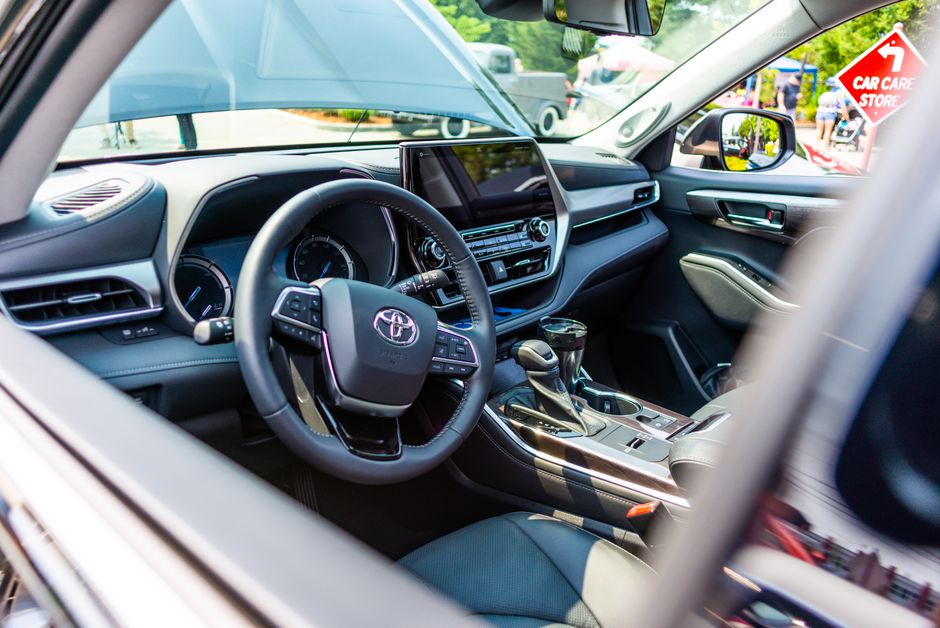
A Toyota Highlander deal is legitimate only when the dealer gives you a written, vehicle-specific out-the-door price that separates the sale price, required government charges, dealer fees, add-ons, and financing terms. Do not treat a low monthly payment, promotional APR, military rebate, or college rebate as a universal discount. Compare the same configuration across dealers before discussing trade-in or financing.
Can I get a Toyota Highlander below MSRP right now?
Public information cannot confirm that any particular Highlander is available below MSRP right now; the answer depends on the exact vehicle on a dealer's lot and the dealer's written quote. The useful move is not to chase a banner number. It is to make each dealer price the same stock number or the same trim, powertrain, and equipment.
Toyota USA Newsroom said the 2026 gas Highlander XLE starts at $45,270 and the Hybrid XLE at $47,020, both excluding Dealer Processing and Handling. Those are starting MSRPs, not promises of an available transaction price. Toyota also lists four gas grades and three hybrid grades, so a quote for one configuration is not a clean comparison with another.
Use a simple rule: same vehicle, same math. Ask each store to identify the VIN or stock number, trim, gas or hybrid powertrain, and every installed option. Then ask for the complete out-the-door price. The Federal Trade Commission says that price should include all charges and fees, and recommends confirming that the specific vehicle is on the lot before leaving home.
Local supply matters, but it does not give a shopper a published Highlander discount target. J.D. Power and GlobalData projected 70 days of industry retail supply in December 2025 and noted that incentives vary widely by powertrain. Its projected $3,219 average non-EV discount was an industry figure, not a Highlander benchmark. Treat it as context, not as a number a dealer must match.
| Option | Who it suits | Published cost or term | Key limitation |
|---|---|---|---|
| 2026 gas Highlander XLE | Shopper comparing the gas starting configuration | MSRP starts at $45,270, excluding Dealer Processing and Handling | Actual dealer price and fees vary |
| 2026 Highlander Hybrid XLE | Shopper comparing the hybrid starting configuration | MSRP starts at $47,020, excluding Dealer Processing and Handling | Not directly comparable to a gas XLE quote |
| Toyota Financial Services promotional APR | Qualified buyers using Toyota Financial Services | 4.99% APR for 72 months, or $16.10 per $1,000 financed, in the cited Northern California offer | Offer stated it expired March 2, 2026, required approved credit, and could not be combined with listed cash and lease programs |
| Military or college rebate | Qualifying buyers only | $500 each in the cited Toyota offer | Eligibility-based, not a universal vehicle-price reduction |
Are Toyota Highlander dealer discounts real or tied to dealer financing?
They can be real, but a claimed discount may also depend on financing, eligibility, or a particular vehicle, so require the conditions in writing. Toyota's cited Northern California offer stated, “Dealer contribution may vary and could affect price. Individual dealer prices, other terms and offers may vary.” That language is the dividing line: a payment program and a vehicle-price discount are separate negotiations.
The cited Toyota offer advertised 4.99% APR for 72 months on a new 2026 Highlander for qualified buyers through March 2, 2026. It also said the APR could not be combined with TFS Lease Cash, Down Payment Assistance, Trade-in Assistance, Customer Cash, Lease, or Lease Subvention Cash. A shopper cannot assume the lowest rate and every advertised cash offer stack together.
Use the two-column test. In one column, ask for the out-the-door cash price with no dealer financing requirement. In the other, ask for the out-the-door price using the dealer's financing, plus APR, term, amount financed, required down payment, and every rebate or incentive applied. If the second column is lower only because it assumes qualification for a rebate or a financing program, it is conditional savings, not an unconditional dealer discount.
Send this email or use this phone script: “Please confirm the VIN or stock number is available and send your written out-the-door price, including taxes, government fees, dealer fees, and installed add-ons. Please list every rebate separately and state whether the price requires Toyota Financial Services financing, a specific down payment, or buyer eligibility.” This reduces the recipient's cognitive load. It also gives you a document you can compare.
The FTC specifically warns that advertised discounts can be restricted by financing with a particular bank, military or college eligibility, limited models, undisclosed fees, or large down payments. Ask the question before the visit, not at the signing desk.
Should I negotiate the out-the-door price or the monthly payment?
Negotiate the out-the-door price first, then compare financing by APR, term, amount financed, and total loan cost; a monthly payment alone is not a deal metric. The CFPB puts it plainly: the total cost of the loan matters, because a lower payment can result from extending the term.
Start with a financing benchmark from a bank, credit union, or other lender. The CFPB auto loan guide recommends doing this before visiting a dealer. It explains that the lender's quote to the dealer is the buy rate and that a dealer may charge more as compensation for arranging the loan. A preapproval gives you a comparison point, not an obligation to refuse dealer financing.
Then run the four-number check: “What is the out-the-door price? What APR applies? What is the term? What is the amount financed?” Ask for the total of payments too. If a salesperson returns to payment only, repeat the four numbers. That is not being difficult. It is keeping the transaction comparable.
Next, isolate add-ons and dealer charges. The CFPB says optional products such as alarm systems, window tinting, tire or wheel protection, extended warranties or service contracts, GAP insurance, and credit insurance are negotiable. It also identifies preparation, origination, document, delivery, and market-adjustment fees above MSRP as charges that may be negotiable. Taxes, title, and registration fees set by state or local government are different: those are not dealer-negotiated items.
Use this replacement phrase at the desk: “Please itemize every charge. Remove the optional products I have not chosen, and show the revised out-the-door price before we discuss payment.” The FTC advises comparing financing offers from several creditors and the dealer, rather than focusing only on monthly payment.
Close the loop: collect two written quotes this week for the same Highlander configuration. Circle every condition beside each discount, then choose the offer with the lowest acceptable out-the-door price and financing terms you can verify.
Frequently Asked Questions
How do I avoid dealer add-ons when buying a Highlander?
Ask for an itemized out-the-door quote before visiting and request the price of every proposed product. The CFPB identifies products such as service contracts, GAP insurance, tint, alarm systems, and tire or wheel protection as negotiable; decline products you do not want and ask the dealer to remove them from the written quote.
Is it worth traveling to another dealer for a better Highlander price?
It can be worth comparing another dealer when that dealer confirms the exact vehicle is in stock and provides a written out-the-door price. The FTC recommends confirming availability and obtaining the complete written price before leaving home, which lets you compare offers without treating an advertised number as a final deal.
When is the best time of year to negotiate a Highlander deal?
The provided sources do not establish one best season for a Highlander purchase. Inventory and incentives change, so use the current vehicle-specific out-the-door quotes and current manufacturer terms rather than relying on a calendar rule; Toyota's published 2026 APR offer, for example, had a stated expiration date and eligibility conditions.
Sources
- Toyota Highlander Deals and Incentives
- Toyota USA Newsroom: 2026 Toyota Highlander
- Consumer Financial Protection Bureau: What Can I Negotiate?
- Consumer Financial Protection Bureau: Auto Loan Guide
- Federal Trade Commission: Car Dealer Ads and Promotions
- Federal Trade Commission: Financing or Leasing a Car
- J.D. Power and GlobalData: December 2025 Forecast