
Can Skincare Treat Deep Forehead Wrinkles, or Do I Need Botox?
Skincare can improve the look of fine lines and photoaging, but it will not reliably erase deep forehead creases driven by muscle movement. For moderate-to-severe expression lines, FDA-approved botulinum toxin has the clearer evidence for temporary improvement. If lines stay visible when your face is still, use skincare as baseline care and discuss resurfacing or other clinician-led options with a dermatologist.
Can retinol or wrinkle cream get rid of deep forehead lines?
No. Retinol and wrinkle creams can improve fine surface wrinkles, but the evidence provided does not show that they remove deep forehead lines caused by repeated frontalis-muscle movement. That distinction saves you from a costly expectation mismatch: a topical product works at the skin-care layer; an expression crease has a movement component.
In a randomized, double-blind 12-week study of 44 participants, 0.5% retinol reduced fine-wrinkle surface area by 8.3% at four weeks, 11.1% at eight weeks, and 23.2% at 12 weeks. That is a useful signal for consistent topical care. It is not proof that retinol can flatten a deep crease that forms each time the forehead muscle contracts.
Retinol also has a practical cost: participants using it reported more scaling and stinging than those using bakuchiol. A straightforward routine decision is to choose the product you can use consistently, then judge it against the right job. Better-looking fine texture is a realistic job. Erasing a pronounced expression line is not.
| Option | What the supplied evidence supports | Expectation to set |
|---|---|---|
| Retinol | Improved fine-wrinkle surface area during 12 weeks of consistent use. | Incremental improvement in fine wrinkles, not established removal of deep expression creases. |
| Bakuchiol | Improved wrinkle surface area in the same study, without a statistical difference from retinol. | An alternative topical discussed in photoaging research; it is not evidence of a deep-line eraser. |
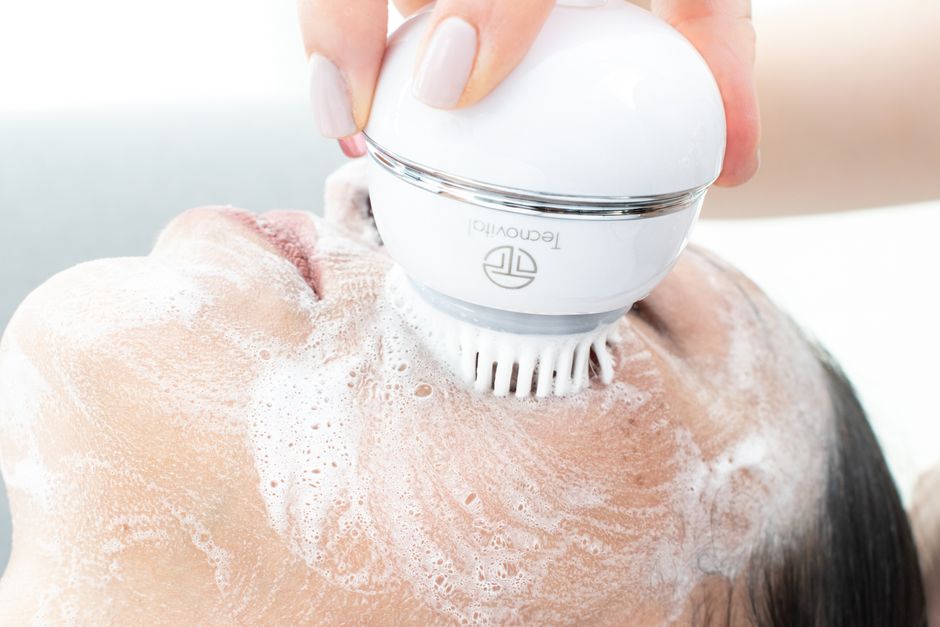
| At-home devices | May improve signs of skin aging to some extent. | Evidence for durable change in established deep wrinkles is limited. |
Do I need Botox for forehead wrinkles or can skincare work?
You do not need to choose one camp for every wrinkle, but skincare and botulinum toxin solve different parts of the problem. Use topical care for skin quality and fine lines; consider a clinician-led discussion of botulinum toxin when forehead lines are moderate to severe and clearly deepen with movement.
The American Society of Plastic Surgeons draws the useful line: static wrinkles are visible at all times, while dynamic wrinkles deepen with facial expressions and may appear as folds even when the skin is not moving. Think of this as the movement test. Raise your brows, then relax them. If the line changes substantially, muscle activity is part of the treatment decision.
The FDA indicates BOTOX Cosmetic for temporary improvement of moderate-to-severe forehead lines associated with frontalis muscle activity. In its forehead-line studies, 921 people received BOTOX Cosmetic and 257 received placebo; significantly more treated participants achieved at least a two-grade improvement by Day 30. The label recommends treating forehead lines with glabellar lines, using 20 Units for the forehead and 20 Units for glabellar lines, for a 40-Unit total. That is prescribing information, not a self-treatment script.
Results are temporary. The American Academy of Dermatology says most people see botulinum toxin results within 3 to 7 days and that improvements generally last about 3 to 4 months. The same source says people can return to most everyday activities immediately after the procedure.
Put safety in the decision, not in the footnotes. In forehead-line trials, the FDA label reports headache in 9% of participants and brow ptosis in 2%. The FDA also lists effects including facial weakness, eyelid or brow drooping, localized pain, swelling, redness, and bruising; rare effects include double vision, dry eyes, and swallowing or breathing difficulty. Cosmetic botulinum toxin use is not recommended during pregnancy or lactation.
Fillers are not interchangeable with botulinum toxin. As the FDA explains, botulinum toxin products are injectable drugs rather than dermal fillers, and they work by keeping muscles from tightening so wrinkles show less. The supplied sources do not provide outcome data for fillers in forehead wrinkles, so do not treat them as a documented substitute here.
How long does retinol take to improve forehead lines?
In the supplied retinol trial, measured fine-wrinkle improvement appeared at four weeks and increased through week 12. Give a topical routine enough time to show its documented type of result, then reassess the actual line in front of you rather than the promise on the package.
Use this three-part review: first, ask whether the line is fine or deep; second, check whether it mainly appears with brow movement or remains visible at rest; third, decide whether gradual surface improvement meets your goal. If your goal is a fast, temporary reduction in movement-driven lines, topical timing is the wrong metric because the treatments work differently.
At-home devices deserve the same reality check. A review of home beauty-device research included 18 clinical studies, but only five were randomized controlled trials and only three enrolled more than 50 participants. The longest follow-up was 12 weeks. Reported redness and swelling were generally transient, yet small studies and professional supervision limit what that literature can promise for established deep wrinkles.
If a wrinkle remains at rest and you want more than gradual topical improvement, bring a clear question to a dermatologist: “Is this primarily a movement line, a static wrinkle, or both, and which option matches that pattern?” That question lowers the cognitive load of the consultation and keeps the discussion focused on the result you actually want.
Resurfacing is one clinician-led path for static texture and lines. The American Society of Plastic Surgeons lists ablative fractional and CO2 lasers as treatments that remove outer skin layers to smooth lines and wrinkles. A systematic review comparing CO2 and erbium:YAG laser resurfacing for mild-to-moderate facial wrinkles found greater wrinkle-improvement efficacy with CO2, while erbium:YAG had a better complication profile; reported complications included erythema, hyperpigmentation, crusting, and one case of hypopigmentation.
Microneedling is another minimally invasive option, but do not promote it to a guaranteed deep-wrinkle solution. A systematic review of 21 studies involving 723 patients found 83% pooled patient satisfaction, while also noting nonstandardized aesthetic outcomes that limit firm conclusions about efficacy. Most included studies used multiple sessions, and reported adverse effects were chiefly transient, including erythema, scaling, burning, and itching.
For a routine that supports the broader health habits around appearance without making unsupported skin promises, see How Can Busy Adults Eat Healthy on a Budget?. Then do the useful homework: identify whether your forehead line is movement-driven, visible at rest, or both; write down the outcome you want; and take that exact brief to a board-certified dermatologist.
Frequently Asked Questions
What is the difference between fine lines, static wrinkles, and expression lines?
Fine lines are smaller surface changes often discussed in photoaging research. Expression lines are dynamic wrinkles that deepen with facial movement; static wrinkles remain visible all the time. The American Society of Plastic Surgeons notes that dynamic wrinkles can also remain as folds when the face is at rest.
Are at-home wrinkle devices effective for deep wrinkles?
The available evidence does not establish that at-home devices reliably improve established deep wrinkles. A review of 18 clinical studies found only five randomized controlled trials, few studies with more than 50 participants, and follow-up no longer than 12 weeks. Some devices improved signs of skin aging to some extent, but the evidence base is limited and often professionally supervised.
What treatments work when forehead wrinkles remain visible at rest?
When wrinkles remain visible at rest, the issue is no longer only muscle movement. The American Society of Plastic Surgeons describes laser resurfacing as an option to smooth lines and wrinkles, while a review of facial-wrinkle studies found CO2 laser more effective than erbium:YAG laser but with a less favorable complication profile. A dermatologist can assess whether a movement-targeting treatment, resurfacing, or another approach fits the wrinkle pattern and safety considerations.
Sources
- U.S. Food and Drug Administration: BOTOX Cosmetic Prescribing Information
- American Society of Plastic Surgeons: Skin Rejuvenation and Resurfacing
- American Academy of Dermatology: Botulinum Toxin Overview
- PubMed: Topical Bakuchiol and Retinol for Facial Photoageing
- PubMed: Microneedling for Facial Rejuvenation
- PubMed: CO2 and Erbium:YAG Lasers for Facial Wrinkles
- PubMed: Home Beauty Devices for Facial Rejuvenation
- U.S. Food and Drug Administration: Dermal Filler Dos and Don'ts
Read next

How Can I Start Retinol After 50 Without Dryness or Peeling?
A practical retinol plan for adults over 50: start slowly, protect dry areas, avoid irritation triggers, and know when to stop.

Negotiate a Toyota Highlander Deal Without Financing Traps
Learn how to compare Toyota Highlander quotes, separate real discounts from financing incentives, and negotiate the out-the-door price.

How Should I Care for My Skin During Menopause?
A practical menopause skincare guide for dryness, sensitivity, dullness, and reduced firmness, with evidence-based routine steps.