
How Can I Start Retinol After 50 Without Dryness or Peeling?
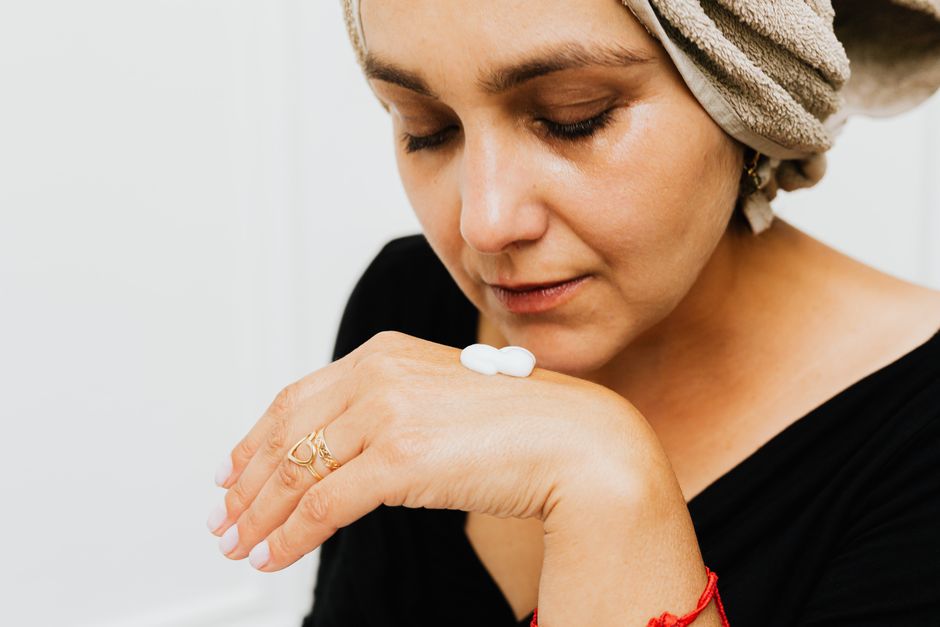
Start with the least-intense retinol product, use a pea-sized amount on dry skin two or three nights weekly, and increase only when your skin stays comfortable. Put moisturizer around vulnerable areas first, avoid exfoliating acids and benzoyl peroxide on retinol nights, and use daytime sun protection. Stop rather than push through red, itchy, swollen, or persistently irritated skin.
Why is my face red and peeling after starting retinol at 50?
Your face is red and peeling because retinol can cause temporary irritation, but strong or persistent redness is a stop signal, not a toughness test. Retinoids speed surface-cell turnover and boost collagen, which is why they can improve fine lines and wrinkles, but the same process can leave dry or sensitive skin struggling to keep up.
The American Academy of Dermatology says people with dryness or skin allergies may not be good candidates for retinoids, and those with substantial redness or inflammation should ask a dermatologist about alternatives. The Cleveland Clinic also lists dryness, burning, itching, redness, peeling, scaling, and sunburn among retinol's possible adverse effects.
Use the signal-versus-noise check. Mild, temporary dryness is a reason to slow the schedule and reinforce moisturizer. Red, itchy, or swollen skin is different: the AAD advises washing the product off and not using it again. Do not try to solve a damaged-feeling routine by adding more active products.
One common cost is stacking irritation. The AAD warns that exfoliating while using retinol can worsen dry skin or cause breakouts, and identifies retinol, prescription retinoids, and benzoyl peroxide as products that can increase sensitivity or peeling. Replace an exfoliation night with a plain moisturizer night. Less action, more recovery.
How many nights a week should a beginner over 50 use retinol?
A beginner over 50 should start retinol two or three nights a week for a couple of weeks, then add nights only if excessive irritation does not occur. This is the sensible starting line for dry or sensitive mature skin: build tolerance before chasing frequency.
The AAD gives that two-to-three-times-weekly approach, while another AAD retinoid guide recommends the least-intense formula every other night at first and a slow increase. The Cleveland Clinic likewise advises every-other-day application for the first couple of weeks. These are compatible instructions, not competing ones: begin below your skin's irritation threshold and advance gradually.
| Stage | Retinol schedule | Decision rule |
|---|---|---|
| Weeks 1-2 | Two or three nights weekly | Keep the schedule if skin is comfortable; do not add exfoliation. |
| Weeks 3-4 | Every other night only if there is no excessive irritation | Hold or reduce frequency if dryness, burning, or peeling increases. |
| Weeks 5-8 | Increase gradually only if skin remains comfortable | There is no prize for nightly use; stay at the frequency your skin tolerates. |
Results also require a realistic clock. In a 2024 integrated analysis of six vehicle-controlled studies, 0.1% stabilized retinol improved assessed signs of photoaging versus vehicle from week 4 through week 12. A separate 26-week randomized study of 0.075% retinol found fine-wrinkle improvement in 27 of 54 participants on the retinol-treated side, compared with 13 of 54 on the vehicle side. Frequency is only useful when it is sustainable.
Should I apply moisturizer before or after retinol?
Apply moisturizer before retinol on the areas most likely to sting or peel, and finish with moisturizer after retinol if your skin needs it. That is the practical version of a retinol sandwich: protect the weak points, use a small amount of retinol, then support the barrier rather than leaving it exposed.
The AAD specifically recommends a small amount of petroleum jelly or hydrating moisturizer under the eyes and at the corners of the nose and mouth before applying retinoid to the face. The Cleveland Clinic advises a pea-sized amount in a thin layer, avoiding the eyes, mouth, and nose, followed by a noncomedogenic moisturizer.
- Wash, then wait. The Cleveland Clinic advises waiting 30 minutes after washing before applying retinol.
- Protect the edges. Apply moisturizer or petroleum jelly under the eyes and at the nose and mouth corners.
- Use less, not more. Apply one pea-sized amount in a thin layer, avoiding the eyes, mouth, and nose.
- Close with moisturizer. Use a noncomedogenic moisturizer after retinol if dryness is a concern.
Do not use product strength as your only decision tool. The AAD notes that over-the-counter retinol labels have no standard requirement to disclose the retinol percentage. Product comparison can therefore create false certainty. Start with the least-intense formulation, watch your skin's response, and make one change at a time.
Daytime protection is part of the routine, not an optional extra. Retinoids increase sun sensitivity, so the AAD recommends nighttime use and daytime sun protection; the Cleveland Clinic specifies SPF 30. Retinol should not go on sunburned, broken, or otherwise irritated skin.
A practical reset when your skin is not coping
When your face is persistently uncomfortable, run a reset instead of a guessing game. Pause retinol. Remove exfoliating acids and benzoyl peroxide from the same routine. Use the product only after a new-product test when you are ready to restart: the AAD advises applying it twice daily for seven to 10 days to a quarter-sized area before regular use.
If retinol still produces substantial redness or inflammation, ask a dermatologist about alternatives rather than cycling through stronger products. The supplied research supports retinol's wrinkle benefits, but it does not establish that a retinal product is gentler for every person. Keep the decision evidence-led, not label-led.
Keep the rest of your routine simple enough that you can identify what changed. The same practical approach helps with other health decisions, including choosing a memory supplement based on evidence rather than marketing. One variable at a time lowers the cognitive load and makes the next decision clear.
Frequently Asked Questions
Is retinol purging normal when I am using it for wrinkles rather than acne?
The Cleveland Clinic describes early pimples as a possibility when retinol is used for acne, sometimes called a retinol purge. That does not make new breakouts an expected or necessary part of using retinol for wrinkles. If acne, irritation, or peeling becomes a problem, pause the product and reassess rather than assuming it must be endured.
When should I stop retinol and see a dermatologist?
Stop retinol promptly if your skin becomes red, itchy, or swollen, because the American Academy of Dermatology identifies those signs as a possible skin reaction. Wash the product off and do not use it again; seek dermatology care for a severe reaction that does not improve with a cool compress or petroleum jelly, or for persistent unexplained reactions. The AAD also advises people with substantial redness or inflammation to ask a dermatologist about alternatives.
Can I use vitamin C, exfoliating acids, or peptides with retinol?
The supplied sources specifically warn against exfoliating while using retinol because it can worsen dry skin or trigger breakouts; alpha- and beta-hydroxy acids are chemical exfoliants. The sources do not provide a combination protocol for vitamin C or peptides. Keep exfoliating acids off the retinol routine until your skin is stable, and use a dermatologist for individualized advice on the other combinations.
Your next move is simple: choose a low-intensity product, set a two-to-three-night schedule, and write down your skin's response before adding a night. Comfortable skin is the operating requirement. Frequency comes second.
Sources
- American Academy of Dermatology: Dermatologists' tips on skin, hair, and nails
- American Academy of Dermatology: Retinoid and retinol benefits
- American Academy of Dermatology: How to test skin care products
- American Academy of Dermatology: How to safely exfoliate at home
- Cleveland Clinic: Retinol
- PubMed: Improvement of photoaged facial skin in middle-aged Japanese females by topical retinol
- PubMed: Efficacy and Tolerability of Topical 0.1% Stabilized Bioactive Retinol for Photoaging
Read next

How Do I Plan a Backyard Makeover Without Paying Twice?
A phased backyard-planning method for budgeting wisely, sequencing hardscape and planting, and avoiding costly rework.

How Can I Turn Around Without Feeling Unsteady or Falling?
A practical guide to safer turning drills, home safety habits, and signs that balance trouble needs medical assessment.

Negotiate a Toyota Highlander Deal Without Financing Traps
Learn how to compare Toyota Highlander quotes, separate real discounts from financing incentives, and negotiate the out-the-door price.

Which Used Jeep Wrangler Should a First-Time Owner Buy?
A practical used Jeep Wrangler guide covering years, engines, steering checks, modifications, and Sport versus Rubicon value.