
Which Used Jeep Wrangler Should a First-Time Owner Buy?
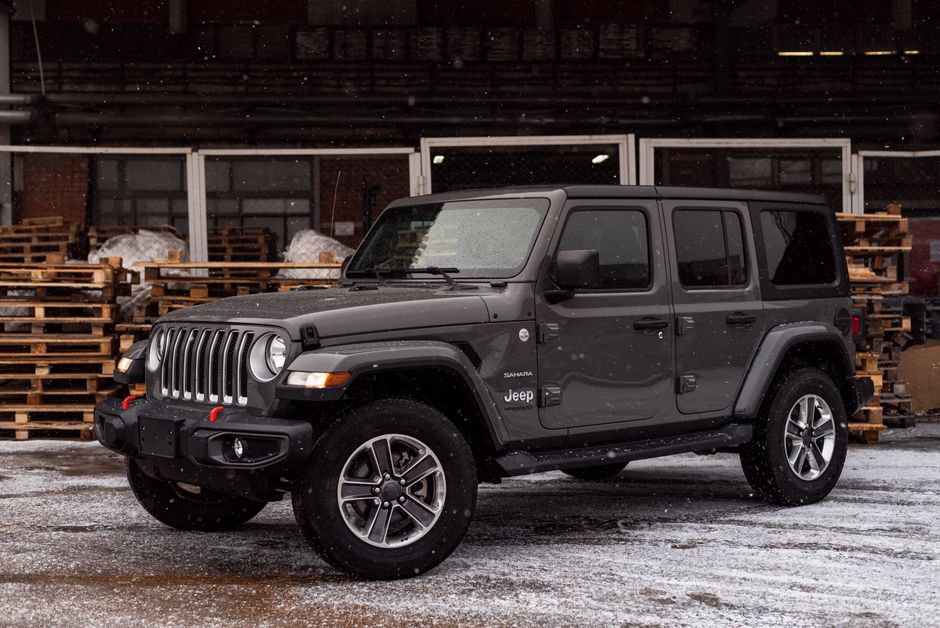
For daily driving and light off-roading, start with a stock or lightly modified Wrangler, verify its recall and service history, and give special scrutiny to early-production 2018 JL models and any lifted JK. A Sport is usually the value choice for mild trails; choose a Rubicon only when its locking differentials, 4:1 transfer case, and trail hardware match the routes you will actually drive.
Which used Jeep Wrangler years should I avoid?
Do not automatically reject an entire Wrangler generation; instead, avoid buying an early-production 2018 JL or a modified 2012-2015 JK without documentation and a careful inspection. The JL redesign began for 2018, while the previous design continued for much of that year as the Wrangler JK, according to the Insurance Institute for Highway Safety.
The highest-priority year-specific check is an early JL built before March 2018. In its investigation of 2018-2019 Wranglers, the National Highway Traffic Safety Administration identified early-production weld-quality causes that included improper techniques on galvanized frames and off-seam welds. Production changes followed after July 2018, and reports of weld failures dropped. That is not a blanket verdict on every early JL. It is a reason to make build timing, recall records, and the condition of visible frame and steering-related areas a purchase gate.
Use the seller conversation to lower your cognitive load before the test drive. Ask: “Can you show the build information, recall-completion records, and receipts for steering or suspension work?” If the records are missing, price cannot replace evidence. Arrange an independent inspection that can examine areas you cannot see clearly.
| Candidate | What to verify | Why it matters |
|---|---|---|
| Early-production 2018 JL | Build timing, recall history, frame and steering condition | NHTSA documented weld-quality issues before March 2018 and a recall for reduced steering ability from a misaligned front track-bar weld. |
| 2018-2020 JL | Steering behavior over normal road imperfections | An FCA bulletin addresses steering-wheel shimmy after bumps, potholes, and expansion joints. |
| 2012-2015 JK with a 4-inch Mopar lift | Alignment, track-bar bracket, and steering-stabilizer clearance | FCA specified these checks for a low-speed vibration or shimmy condition. |
Is a Jeep Wrangler reliable enough to use as a daily driver?
A Wrangler can serve as a daily driver when it passes a disciplined inspection, but the supplied public sources do not provide a complete repair-rate comparison that proves one used Wrangler is broadly reliable. Buy the specific vehicle, not the reputation. Its steering behavior, modifications, records, fuel use, and safety trade-offs affect the commute every day.
Fuel is the easiest recurring cost to compare before you buy. For 2021 two-door 4WD Wranglers with the eight-speed automatic, FuelEconomy.gov rates the 2.0L turbo at 23 mpg combined, 22 city, and 24 highway. The comparable 3.6L V6 is rated at 21 mpg combined, 20 city, and 24 highway. The listed consumption figures are 4.3 versus 4.8 gallons per 100 miles. That difference is modest, but it repeats with every commute.
Do not reduce the engine choice to one mpg figure. The 3.6L V6 is rated at 285 horsepower and 260 lb-ft of torque; the 2.0L turbo is rated at 270 horsepower and 295 lb-ft. Compare the exact door count, transmission, and equipment because FuelEconomy.gov lists multiple configurations. For mixed conditions, ask whether a Sport has the available Selec-Trac full-time two-speed transfer case rather than assuming every Sport is configured the same way.
Safety belongs in the daily-driver decision, too. IIHS rated redesigned 2018-2021 four-door Wranglers Marginal in the driver-side small-overlap frontal test after test vehicles tipped onto the passenger side. It also gives the updated side-test overall rating of Marginal for 2018-2023 models. This is not a reason to skip research; it is a reason to include it before signing.
How can I spot death wobble during a Wrangler test drive?
Use a normal, legal road route with safe imperfections and stop the evaluation if the steering wheel begins to shimmy or the vehicle feels difficult to control. Do not declare the steering healthy because a smooth route felt calm. FCA bulletin 19-002-19 says a steering-wheel shimmy on 2018-2020 JL Wranglers can occur after an expansion joint, pothole, bump, or other road irregularity.
Run the “trigger, observe, document” drill. First, on a safe route, drive over ordinary road irregularities without seeking out harsh impacts. Next, notice whether the steering wheel shimmies afterward and whether the behavior repeats. Finally, ask the seller for records of steering-damper, track-bar, alignment, or related work before treating an explanation as a repair.
NHTSA’s investigation linked some steering wobble or shimmy reports to steering-damper design and manufacturing issues, including air in the base valve that degraded damping performance. FCA’s V41 customer-satisfaction campaign introduced supplier quality-control and design changes in June 2019. The useful conclusion is simple: a damper-related history is information to verify, not a substitute for a test drive and inspection.
Should I avoid a used Wrangler with a lift kit or oversized tires?
A used Wrangler with a lift kit or oversized tires is not an automatic no, but it deserves a higher inspection standard because suspension geometry and steering setup must work as a system. A clean-looking lift is cosmetic evidence. Alignment records, component clearance, and controlled road behavior are operational evidence.
FCA bulletin 02-008-15 covers 2012-2015 JK Wranglers built before June 15, 2015 with a 4-inch Mopar lift kit and a low-speed vibration or shimmy condition. Its repair calls for a replacement front track-bar bracket, a complete wheel alignment, and checks of steering-stabilizer clearance and orientation. Those details make a practical inspection script: “Which lift components were installed, who aligned it, and can you provide the alignment record?”
For light off-roading, factory capability usually reduces decision fatigue. The 2021 Sport and Sahara use a Command-Trac two-speed transfer case with a 2.72:1 low range, and the Sport can be equipped with a Trac-Lok limited-slip rear differential for light trails, sand, mud, or snow. The Stellantis 2021 Wrangler specifications show that the Rubicon adds Dana 44 axles, a 4:1 Rock-Trac transfer case, front and rear locking differentials, a disconnecting front sway bar, rock rails, and 33-inch all-terrain tires.
That is the decision rule: choose the Sport when the job is commuting plus occasional mild terrain; choose the Rubicon when low-speed technical obstacles are a regular part of the job. This week, write down the actual roads and trails you expect to use, then require every candidate to clear the same records, steering, frame, leak, recall, and modification checks.
Frequently Asked Questions
What rust areas should I inspect on a used Jeep Wrangler?
The provided sources do not identify a complete rust-area checklist. Inspect the frame and visible weld areas carefully, especially on an early-production 2018 JL, because NHTSA documented weld-quality concerns on galvanized frames built before March 2018. Ask for recall-completion records and have a qualified inspection address anything that is obscured, corroded, or difficult to assess.
Which is better for a used Wrangler: the 3.6L V6 or 2.0L turbo?
For the listed 2021 two-door automatic 4WD configurations, the 2.0L turbo delivers better EPA fuel economy: 23 mpg combined versus 21 mpg for the 3.6L V6. The V6 is rated at 285 horsepower and 260 lb-ft, while the turbo is rated at 270 horsepower and 295 lb-ft. Compare the exact vehicle because door count, transmission, and equipment change the EPA listing.
Should I buy a Wrangler Sport or Rubicon for light off-roading?
Buy the Sport for light off-roading unless your regular routes require low-speed technical capability. The Sport can handle light trails, sand, mud, or snow when appropriately equipped, while the Rubicon adds locking differentials, a disconnecting front sway bar, Dana 44 axles, 33-inch tires, and a 4:1 transfer case for more demanding terrain.
Sources
- National Highway Traffic Safety Administration: 2018-2019 Jeep Wrangler investigation
- National Highway Traffic Safety Administration: 2018-2020 JL steering shimmy bulletin
- U.S. Department of Energy and Environmental Protection Agency: 2021 Jeep Wrangler fuel economy
- Insurance Institute for Highway Safety: Jeep Wrangler four-door ratings
- Stellantis North America: 2021 Jeep Wrangler specifications
- National Highway Traffic Safety Administration: 2012-2015 JK lift-kit bulletin
Read next

What Should I Do on My First Visits to the Gym?
A calm, machine-based strength-training roadmap for first gym visits, from setup and form to recovery and progression.
Negotiate a Toyota Highlander Deal Without Financing Traps
Learn how to compare Toyota Highlander quotes, separate real discounts from financing incentives, and negotiate the out-the-door price.

What Breakfast Cereal and Milk Can I Have With Kidney Disease?
A practical CKD cereal and milk label guide for sodium, potassium, phosphorus, protein, and diabetes meal planning.
Why Does My New Santa Fe Hybrid Blow Hot Air Near the Floor?
The Santa Fe Hybrid has a battery cooling duct under the passenger seat; ask a dealer to inspect reported second-row airflow safely.