
What Should I Do on My First Visits to the Gym?
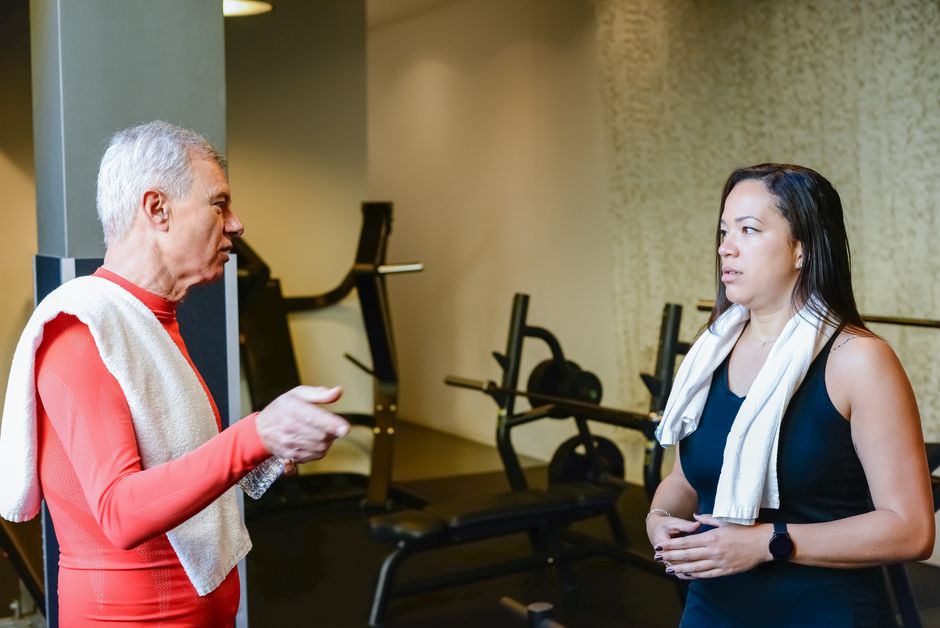
On your first gym visits, ask for an equipment orientation, warm up, then complete a short full-body routine using machines you can adjust and control. Start with light resistance for 10 to 15 repetitions, rest between strength days, and stop any movement that causes pain. The first goal is not exhaustion. It is learning the room, the settings, and sound movement.
What should I do at the gym if I have never lifted weights?
Start by making the gym smaller. One visit can be for finding the changing room, water, cardio area, machine labels, and staff desk. The next can include a short session. Familiarity turns a loud room full of levers into a map.
Ask a staff member for a safety orientation and for help setting up each machine. A useful question is: “Can you show me how to adjust this and where the movement should start and finish?” The request is specific. So is the answer.
Begin with a 5- to 10-minute brisk walk or other aerobic warm-up, as advised in Mayo Clinic's undated weight-training guidance. Then use a small number of machine movements that cover the main parts of the body. Controlled lifting matters more than adding plates.
| First-week checklist | What it accomplishes |
|---|---|
| Ask for an orientation | Learn adjustments, machine rules, and where to get help. |
| Warm up before resistance work | Follow Mayo Clinic's undated recommendation for a brief aerobic warm-up. |
| Set up one machine at a time | Keep the task narrow and make each setting repeatable. |
| Use a light starting effort | Match ACSM's undated public guidance to build gradually. |
| Write down machine settings and resistance | Create a clear starting point for the next visit. |
For a first full-body session, one set on each machine is enough to learn the movement. Mayo Clinic's undated guidance says one set of 12 to 15 repetitions with a muscle-fatiguing weight can build strength efficiently for many people. The first session is a practice session, not a test.
Use the equipment with care. Wipe a bench or handle when the gym provides cleaning supplies. Return pins, handles, and weights to their place. Do not stand over someone using a machine. If a station is busy, ask, “How many sets do you have left?” Clear questions remove most of the awkwardness.
A simple full-body machine session
Choose a resistance level that allows controlled movement. Mayo Clinic's undated guidance identifies the hips, legs, chest, back, shoulders, arms, and abdomen as the major muscle groups to cover.
| Machine or movement | Main area covered | Starting work |
|---|---|---|
| Leg press | Hips and legs | 1 set of 10 to 15 repetitions |
| Chest press | Chest and arms | 1 set of 10 to 15 repetitions |
| Seated row | Back and arms | 1 set of 10 to 15 repetitions |
| Shoulder press | Shoulders and arms | 1 set of 10 to 15 repetitions |
| Leg curl or leg extension | Legs | 1 set of 10 to 15 repetitions |
| Abdominal machine or body-weight abdominal movement | Abdomen | 1 controlled set |
Rest for about one minute between exercises, following Mayo Clinic's undated weight-training guidance. Breathe through the repetition. ACSM's undated public guidance says not to strain or hold the breath.
Pain is a stop sign. Mayo Clinic's undated strength-training guidance says to stop an exercise that causes pain and recommends learning correct technique from a trainer or other fitness specialist. Muscle effort is part of resistance training. Pain during the movement is a reason to stop and reassess the setup, range of motion, or exercise choice.
Should beginners start with machines or free weights?
Beginners can start with machines or free weights; machines are often the simpler first choice when the goal is to learn a movement path with fewer moving parts.
The evidence does not crown one tool. A 2023 systematic review and meta-analysis in BMC Sports Science, Medicine and Rehabilitation included 13 studies and 1,016 adults aged 18 to 60. Its direct comparisons found no significant difference between machine and free-weight training for dynamic strength, isometric strength, jump performance, or muscle growth. Seven included studies involved untrained participants.
That result gives a beginner permission to choose the less intimidating option. Machines use a fixed path and clear adjustment points. Free weights ask the lifter to manage the path as well as the load. Neither is a moral category. Both are resistance tools.
ACSM's undated public guidance lists hand weights, resistance bands, weight machines, and body weight as valid options. The 2023 review found that training changes are specific to the equipment used, so a person who wants confidence with a barbell eventually needs barbell practice. A person who wants a steady, repeatable full-body gym routine can use machines.
Form is the gate. Mayo Clinic's undated guidance states: “If you're not able to keep good form, lower the weight or the number of repetitions.” That rule works on every machine and with every free weight.
How many days a week should I strength train at first?
For a new strength routine, two nonconsecutive days each week is a clear starting pattern.
The U.S. Department of Health and Human Services' undated Physical Activity Guidelines summary recommends muscle-strengthening activity on two days each week for adults. Its guidance for inactive people is to start with small amounts and build toward the wider weekly activity targets over time.
ACSM's undated public guidance recommends strength training on two to three days each week with a rest day between sessions. Mayo Clinic's undated strength-training guidance also recommends a full day of recovery before training the same muscle group again. The shared principle is plain: training and recovery belong to the same plan.
Two sessions create room to notice what happened. Were the machine settings written down? Did the repetitions stay controlled? Did a movement cause pain? Was the next session approached with steadier nerves? Progress is not only more resistance. Progress is less confusion.
When regular gym visits begin to fit the week, everyday food still supports the routine. How Can Busy Adults Eat Healthy on a Budget? covers practical meal planning for adults balancing health goals with cost.
Frequently Asked Questions
How do I choose a weight that is not too heavy?
Mayo Clinic's undated weight-training guidance says to choose resistance that tires the muscles after about 12 to 15 repetitions. If form breaks down before that point, lower the resistance or do fewer repetitions; Mayo Clinic advises stopping an exercise that causes pain. ACSM's undated public guidance also says to begin with light effort before building toward medium or hard effort.
What exercises should a beginner do for a full-body gym workout?
A full-body beginner session can include a leg press, a chest press, a seated row, a shoulder press, a leg curl or leg extension, and an abdominal machine or body-weight abdominal movement. Mayo Clinic's undated guidance says a strength program should cover the hips, legs, chest, back, shoulders, arms, and abdomen. The exact machines vary by gym, so staff can identify the closest available options and show their adjustments.
The gym is not a test of nerve. It is a room with tools, and each tool has a first use.
Sources
- U.S. Department of Health and Human Services, Office of Disease Prevention and Health Promotion
- American College of Sports Medicine, Exercise is Medicine
- Mayo Clinic: Weight Training
- Mayo Clinic: Strength Training
- BMC Sports Science, Medicine and Rehabilitation: Free Weights Versus Machines
Disclaimer: This article is for general information only and is not medical advice. It is not a substitute for diagnosis or treatment by a qualified healthcare professional. Always speak to your doctor before acting on anything you read here.
Read next

Which Used Jeep Wrangler Should a First-Time Owner Buy?
A practical used Jeep Wrangler guide covering years, engines, steering checks, modifications, and Sport versus Rubicon value.

Negotiate a Toyota Highlander Deal Without Financing Traps
Learn how to compare Toyota Highlander quotes, separate real discounts from financing incentives, and negotiate the out-the-door price.

How Can I Start Retinol After 50 Without Dryness or Peeling?
A practical retinol plan for adults over 50: start slowly, protect dry areas, avoid irritation triggers, and know when to stop.

How Can I Turn Around Without Feeling Unsteady or Falling?
A practical guide to safer turning drills, home safety habits, and signs that balance trouble needs medical assessment.