
Should I Patch, Resurface, Overlay, or Replace My Cracked Concrete Patio?
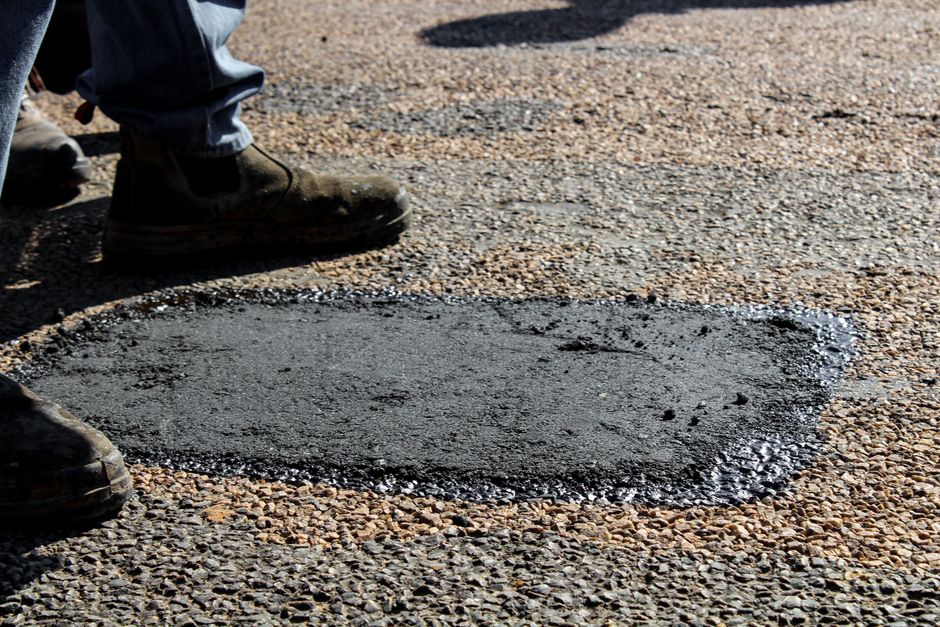
Patch a patio only when cracks are tight and stable; resurface or use an overlay only after the slab has solid support and drainage; choose pavers when the base and slope can be built correctly; and replace a slab with major faulting, wide spalling, broken sections, or continuing movement. The cheapest safe choice is the one that fixes water and support first, not the one that merely hides damage.
Start with a damage audit, not a product aisle. Your decision turns on one question: is the existing concrete still a stable platform, or is it showing that water, soil, or support below it has failed?
| What you see | What it usually means | Budget-conscious next move |
|---|---|---|
| Tight hairline cracks with no height difference | Often surface-level distress | Monitor and make a localized repair if needed |
| Wide cracks, spalling, or uneven slab edges | Possible deeper deterioration or movement | Assess support and drainage before choosing a finish |
| Pooling water, washed-out soil, or pumping | Drainage or erosion may be undermining the slab | Correct water management first |
| Shattered sections, corner breaks, or progressive cracking | Likely structural deficiency | Plan full-depth repair or replacement with professional input |
Can I resurface a concrete patio with cracks?
Yes, but only if the cracks are stable and the slab is still sound. Resurfacing is a finish decision, not a support decision. If the concrete below keeps moving, the new surface inherits the same problem.
The Federal Highway Administration says tight hairline cracks that do not extend through a slab generally do not need special treatment and rarely affect serviceability. That is the green-light category: narrow, non-moving cracks with no broken edges, no growing height difference, and no evidence that water is washing material from below.
Use the support-first test before resurfacing. Walk the patio after rain. Check whether water ponds, whether soil is missing at the perimeter, and whether one side of a crack sits higher than the other. Then inspect the crack itself. A line in the surface is one problem; a split with a displaced edge is another.
FHWA categorizes a crack wider than 12 mm, spalling extending more than 150 mm from a crack, and faulting greater than 12 mm as high-severity distress in its concrete-pavement guidance. A patio is not a highway, but the damage pattern still gives homeowners a useful stop sign: a large, crumbling, uneven break is not a casual resurfacing project.
Weak plan: “Cover every crack and see what happens.” Stronger plan: “Confirm the slab is stable, solve water flow, then renew the surface.” That sequence protects both your budget and the walking surface.
Grinding can reduce an isolated surface irregularity, but it also has limits. FHWA states that severe drainage or erosion problems, indicated by faulting greater than 6 mm or pumping, should be corrected before grinding. Grinding makes a raised edge less abrupt; it does not stop progressive cracking or restore support below the patio.
When is a cracked patio too damaged to repair?
A cracked patio is too damaged for a cosmetic repair when the slab is breaking apart, changing elevation, or losing support beneath it. The deciding issue is not whether the patio looks worn. It is whether the damage is stable enough for the repair to stay put.
Run this four-point triage:
- Check movement. Look for faulting, where one side of a crack is higher than the other, and for cracks that intersect or spread through multiple sections.
- Check edges. Crumbling concrete and broad spalls are more than a visual defect when they create an unstable walking edge.
- Check water. Pooling, active runoff across the slab, missing soil, or material appearing to wash out points to a drainage problem.
- Check the pattern. Corner breaks, shattered areas, and progressive cracks are signs to investigate the base and subgrade rather than apply a surface coating.
FHWA identifies intersecting cracks, corner breaks, and shattered slabs as patterns that can signal poor support below the concrete. Frost heave and swelling soils can also contribute to broken slabs. The right conclusion is simple: do not spend on a finish until you know why the slab is moving.
A concrete overlay may still be an option for a slab that is somewhat to moderately distressed. The American Cement Association and Iowa State University Institute for Transportation distinguish bonded overlays for somewhat to moderately distressed surfaces from unbonded overlays intended to restore structural capacity on more deteriorated pavement. That same technical guidance makes the prerequisite clear: any loss of subgrade support or drainage problem must be corrected first.
For a homeowner, the practical split is this. A stable slab with repairable cracks may justify patching or an overlay. A slab with active settlement, major faulting, widespread crumbling, or suspected voids calls for a concrete or drainage professional before you commit to a material. That is not an upsell. It is the point where guessing becomes expensive.
Keep the scope clean. A patio evaluation concerns outdoor water and walking safety; decisions about household drinking water need a different checklist, such as Choose Bottled Water by Reading the Label, Not the Marketing.
Can pavers be installed over an old concrete patio?
Yes, pavers can be installed over an old concrete patio, but only when the finished surface can drain correctly and the base system is designed to stay stable. Pavers are not a camouflage layer for a slab that is heaving, sinking, or trapping water against the house.
The first non-negotiable is slope. Oregon State University Extension advises sloping a finished slab or paver area down and away from the house by 1 inch for every 4 feet. That gives water an exit route instead of turning the patio into a shallow basin.
A conventional paver installation also needs room for structure. OSU Extension specifies 4 to 6 inches of base material plus 1 inch of sand bedding, in addition to the paver thickness, when calculating excavation depth. Edge restraints matter too: without them, pavers can move and separate under weather exposure and traffic.
This leads to a useful decision rule. If the existing patio is stable, has manageable elevation at doors and steps, and can support proper drainage detailing, a paver system may be a sensible way to create a repairable surface. If adding pavers would make the patio too high, block drainage, or preserve an actively failing slab below, remove and rebuild rather than stack another layer on the problem.
Permeable pavers deserve a separate check. The University of Maryland Extension notes that permeable hardscapes can be used for patios and allow stormwater to infiltrate rather than pond or run off. Its guidance recommends checking infiltration and selecting another site if drainage is below 0.5 inches per hour unless drainage is addressed; it also advises an underdrain where soil cannot absorb water adequately. This is a contractor-evaluation job when site drainage is uncertain.
A floating deck is another route when you need to cover an unattractive slab without treating it as a finished concrete surface. It still needs a stable, safe support plan and must not prevent drainage. The same rule applies: cover is not correction.
Bottom line: spend your first dollars on diagnosis. Photograph the cracks, measure the widest gap and any height difference, observe the patio during or after rain, and decide whether the slab is stable before selecting a patch, overlay, paver system, deck, or replacement. That is the homework: identify the cause before you price the cure.
Frequently Asked Questions
Will a concrete overlay fix a crumbling patio?
No. An overlay can renew a surface that is somewhat to moderately distressed, but it does not solve loss of support, drainage failures, wide cracks, or voids below the slab. The American Cement Association and Iowa State University guide is direct: drainage and subgrade-support problems must be corrected before an overlay is placed.
How do I tell whether patio cracks are caused by drainage or settling?
Look for water pooling, soil washed away at edges, pumping, or increasingly uneven slab sections; these are practical warning signs that water and support need investigation. FHWA identifies severe faulting or pumping as evidence of drainage or erosion trouble, while intersecting cracks, corner breaks, and shattered areas can indicate poor support below the slab. A concrete or drainage professional should assess active movement before a cosmetic repair.
What is the cheapest safe way to update an uneven concrete patio?
The cheapest safe route is usually the smallest repair that addresses the actual cause: stabilize drainage and support first, then repair a localized defect if it is stable. Do not choose grinding, a thin resurfacer, or pavers simply because they cost less at the start if the patio is still moving. Where the slab has significant faulting, erosion, or broken sections, a professional assessment can prevent paying twice for a finish that fails.
Sources
- Federal Highway Administration: Full-Depth Repair of Concrete Pavements
- Federal Highway Administration: Diamond Grinding
- Oregon State University Extension: 10-Step Guide to Installing Pavers
- University of Maryland Extension: Permeable Hardscapes
- American Cement Association and Iowa State University Institute for Transportation: Concrete Overlay Guide
Read next
How Do I Plan a Backyard Makeover Without Paying Twice?
A phased backyard-planning method for budgeting wisely, sequencing hardscape and planting, and avoiding costly rework.
What Should I Put Around an Above-Ground Pool?
Choose safe, low-maintenance edging and ground cover for an above-ground pool without trapping water or risking the liner.